Luxor East Bank — New Kingdom
Karnak Temple Complex
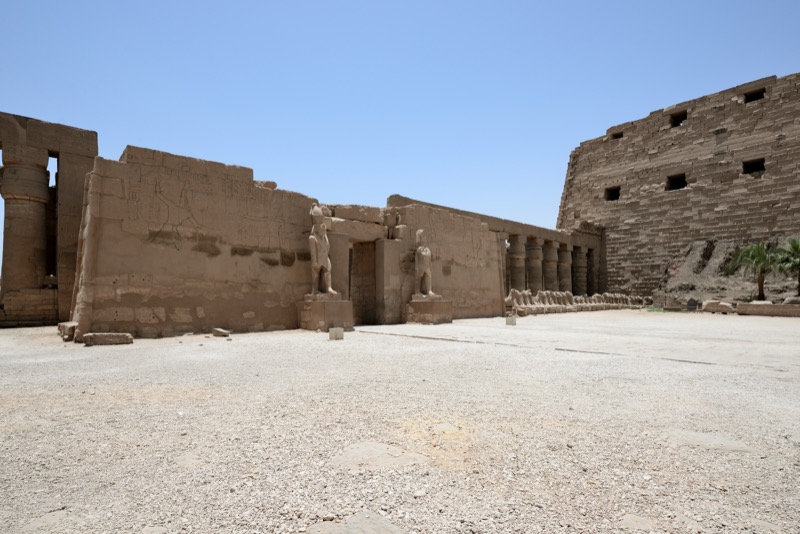
Karnak is not a single temple but a vast sacred precinct — the ancient Egyptians called it Ipet-isut, meaning "the most select of places" — that was continuously expanded by successive pharaohs over a period exceeding 2,000 years, from the Middle Kingdom through the Ptolemaic Period. The result is the largest religious building complex ever constructed, covering more than 100 hectares and encompassing multiple temples, chapels, sanctuaries, pylons, processional avenues and a sacred lake.
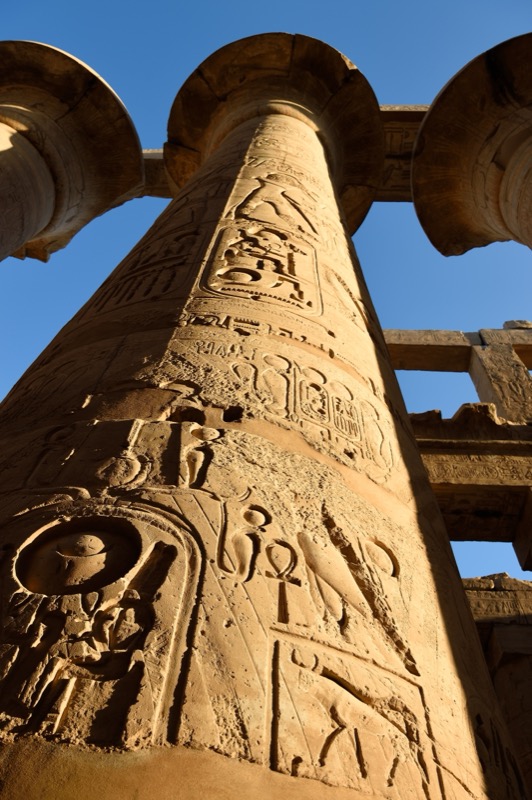
The Great Hypostyle Hall, built primarily under Seti I and completed by Ramesses II in the Nineteenth Dynasty, is arguably the single most impressive interior space in the ancient world. Its 134 sandstone columns, arranged in 16 rows, reach heights of between 15 and 21 metres. The columns are carved and painted with astronomical ceilings, cartouches, offering scenes and divine imagery — the accumulated devotional art of four pharaohs. Standing between the columns gives a physical sense of the deliberate compression and release of space that Egyptian temple architecture uses to evoke the sacred.
The Sacred Lake, measuring 120 metres by 77 metres, was used for ritual purification and for the daily ablutions of the temple priests. At its edge stands a large granite scarab dedicated to the solar deity Khepri by Amenhotep III. Local tradition holds that walking around it seven times grants a wish — a custom far removed from the original theology but not without charm.
The Karnak Open Air Museum, located to the northwest of the main precinct, houses reconstructed chapels and the so-called White Chapel of Senusret I, a finely carved Middle Kingdom kiosk of exceptional quality. It requires a separate ticket and is frequently overlooked by visitors concentrating on the main Amun precinct. We consider it essential. See also our Nile Valley route guide for how to combine Karnak with Luxor Temple in a single day.