Day Trips from Cairo and Luxor
Egypt's major heritage bases — Cairo and Luxor — each sit within reach of a constellation of secondary sites that are individually worth several hours of your time. This guide covers eight day-trip routes with verified travel times, site logistics, and priority-ordered on-site agendas. All timing assumes private vehicle or hired taxi unless otherwise noted.
Day Trips from Cairo Base
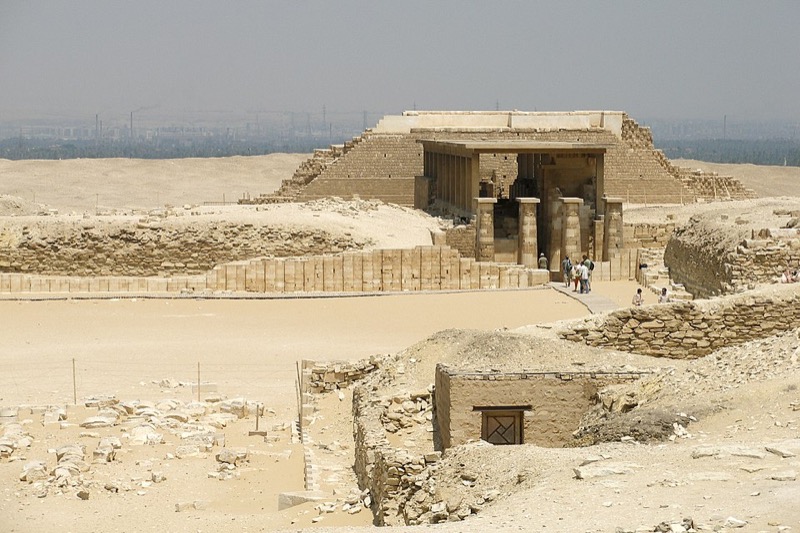
Saqqara + Dahshur + Memphis
This is the most rewarding single-day itinerary reachable from Cairo and one that many visitors mistakenly skip in favour of a second day at Giza. The three sites together tell the story of Old Kingdom pyramid construction from its experimental origins (Dahshur) through its mature bureaucratic phase (Saqqara) to the civic context of the capital at Memphis.
Departure: Leave Cairo by 07:30. Reach Saqqara by 08:30. Spend three to three and a half hours at Saqqara: the Step Pyramid complex, the Serapeum, and at minimum two Old Kingdom mastabas (Ti and Mereruka are the best-preserved). Exit by 12:00.
Dahshur: 15 minutes south by road. The Red Pyramid of Sneferu (c. 2590 BCE) allows interior access via a 65-metre descending corridor. The burial chamber's corbelled ceiling reaches 15 metres. The Bent Pyramid, 2 kilometres north, reveals in physical form the mid-construction decision to change the angle of incline from 54° to 43° — the engineering compromise that led to the pure pyramid form at Giza. Allow one to one and a half hours.
Memphis: The open-air museum at Mit Rahina occupies the site of ancient Memphis, the capital of Old Kingdom Egypt. Its principal exhibits are the alabaster sphinx (8 metres long, 80 tonnes) and the fallen limestone colossus of Ramesses II in the roofed display hall — one of the finest portraits of the pharaoh in existence, showing him with a distinctly personal expression rarely captured in standing royal statuary. Allow 45 minutes.
Return to Cairo by 17:00. This itinerary pairs naturally with a morning visit to the Grand Egyptian Museum the following day, where many Saqqara finds are displayed. See also our Saqqara excavation overview.
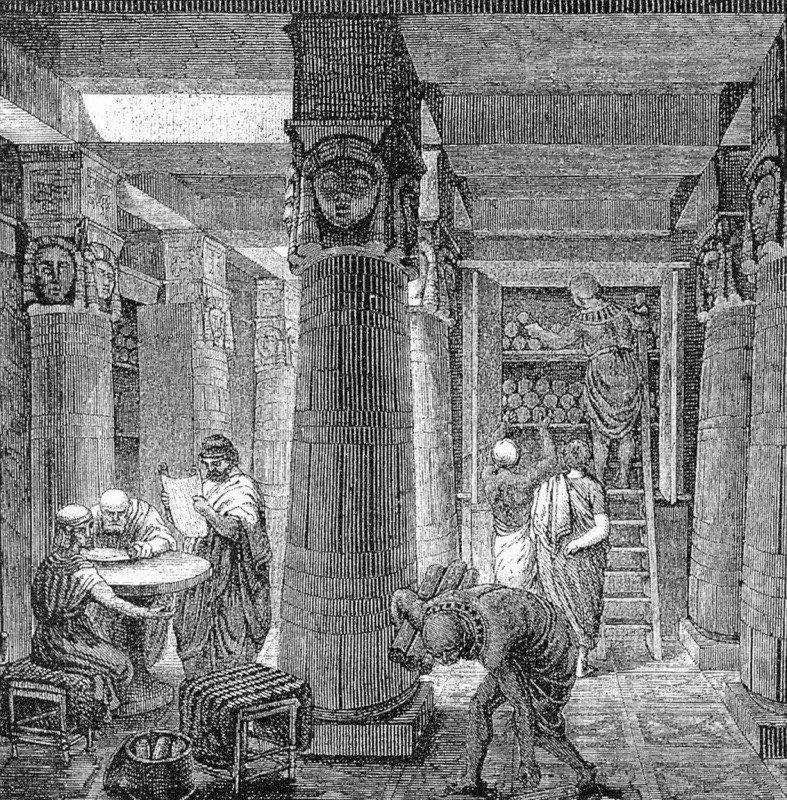
Alexandria Day Trip
Alexandria is at the upper limit of comfortable day-trip range from Cairo — the journey takes approximately 2.5 hours each way by road or 2 hours by train. The train is preferable: the Ramses Station to Alexandria Sidi Gaber service runs frequently and deposits visitors close to the city centre. An early departure (07:00 train or earlier) gives six to seven usable hours on-site.
Priority sequence: Kom el-Shoqafa catacombs (1.5 hours), a complex of Greco-Roman funerary chambers cut into the limestone bedrock in the second century CE, representing the most architecturally elaborate non-pharaonic tomb complex in Egypt. The Pompey's Pillar district adjacent to the catacombs includes the remaining column from the Serapeum temple complex. The Bibliotheca Alexandrina (1 hour minimum), the modern successor to the Great Library, houses its own attached museum and manuscript archive. The Corniche waterfront, the site of the sunken Ptolemaic quarter, is observable from above — the underwater archaeology is accessible only to dive teams.
The catacombs and the Bibliotheca Alexandrina are covered in our Alexandria city overview, which also maps the Ottoman and Khedivial historic districts.
Day Trips from Luxor Base
Dendera Temple — Full Day
The Temple of Hathor at Dendera, approximately 60 kilometres north of Luxor by road (one hour each way), is the best-preserved temple complex in Egypt and is consistently ranked by archaeologists as offering the highest concentration of intact surface art per square metre of any surviving ancient Egyptian structure. Unlike Karnak, Dendera was built predominantly in the Ptolemaic and early Roman periods (300 BCE–50 CE) and never substantially demolished — giving it an architectural integrity that its older Pharaonic counterparts rarely achieve.
The temple hypostyle hall, with its famous Hathor-headed sistrum columns, is immediately striking for its scale — comparable to Karnak's but in a completely different stylistic register, Hellenistic-influenced rather than purely Pharaonic. The ceiling astronomy, partially preserved, includes the original setting of the famous Dendera zodiac (the ceiling now displays a cast; the original is in the Louvre). Access to the roof via an interior staircase gives a view over the temple precinct and the surrounding desert that no other Egyptian temple provides.
The underground crypts beneath the temple — narrow passages cut through the thickness of the enclosure walls — contain some of the most intact relief carving in Egypt. A torch or phone light is essential. The crypt scenes include images of the Dendera zodiac in situ, ritual objects and hieroglyphic texts that were sealed from the outside world until 19th-century excavation. Allow two and a half to three hours at the site. Depart Luxor at 08:00; return by 16:00. Combine with a felucca ride on the Nile for the return journey if your timing is flexible.
For a combined Dendera-Abydos itinerary, see the extended Route 4 notes below. Cross-reference with our monuments guide for Dendera's position in the history of Egyptian temple architecture.
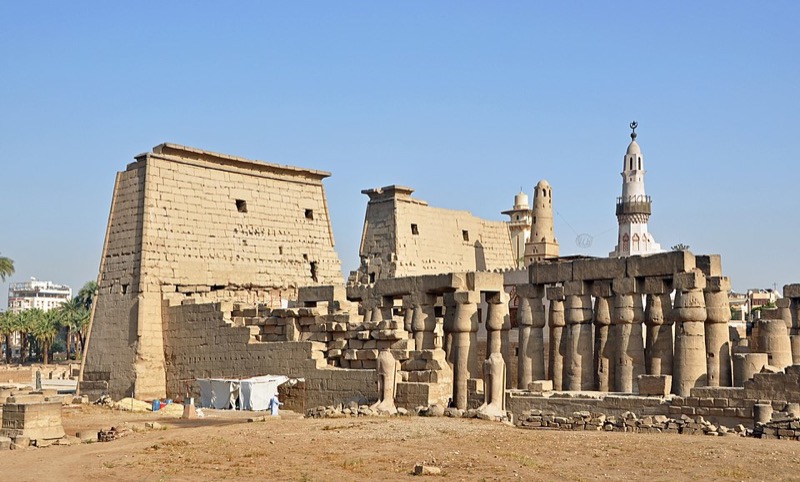
Abydos — The First Royal Cemetery
Abydos in Sohag Governorate, approximately 150 kilometres north of Luxor, is one of the most historically significant sites in Egypt and one of the least visited relative to its importance. The site contains two distinct heritage zones: the royal tombs of the First and Second Dynasty pharaohs at Umm el-Qa'ab (among the earliest royal burials ever excavated, dating to 3100–2890 BCE) and the mortuary temple of Seti I, built in the Nineteenth Dynasty around 1290 BCE and containing some of the finest painted relief work in the country.
The Temple of Seti I is the primary visitor destination. Its seven chapels, each dedicated to a different deity — Osiris, Isis, Horus, Amun-Ra, Ra-Horakhty, Ptah and the deified Seti I himself — are painted in colours that remain among the most vivid of any New Kingdom temple. The famous Abydos King List, a carved panel listing over 70 royal names from Menes through to Seti's own reign (omitting Akhenaten, Smenkhkare, Neferneferuaten and Tutankhamun from the official record) is displayed on the corridor wall of the temple. It is one of the primary sources for Egyptian royal chronology.
Travel from Luxor: private car or taxi, two to two and a half hours each way. Train to Balyana station (40 minutes from Luxor by express train), then local taxi 10 kilometres to the site. The site opens at 08:00; allow two and a half hours. A combined Abydos-Dendera itinerary requires a very early start (05:30 departure from Luxor) but is achievable in a long day. For timing and logistics, our visitor planning guide covers this route in detail.
Day Trip Routes at a Glance
| Route | Base | Distance | Travel Time (each way) | Min. On-Site Time |
|---|---|---|---|---|
| Saqqara + Dahshur + Memphis | Cairo | 25–30 km | 40–60 min | 5 hours combined |
| Alexandria | Cairo | 220 km | 2.5 hrs (car) / 2 hrs (train) | 5–6 hours |
| Dendera Temple | Luxor | 60 km | 1 hour | 2.5–3 hours |
| Abydos (Seti I Temple) | Luxor | 150 km | 2–2.5 hrs | 2.5 hours |
| Dendera + Abydos combined | Luxor | 150 km max | 2.5 hrs max | 5+ hours; early start needed |
| Esna + Edfu | Luxor | 55–110 km south | 1–1.5 hrs | 1 hr each site |
| Kom Ombo + Edfu (from Aswan) | Aswan | 45–100 km north | 1–2 hrs | 1.5 hrs each site |
| Abu Simbel (from Aswan) | Aswan | 280 km | 30 min (flight) / 3.5 hrs (road) | 2–2.5 hours |
Day Trip Planning FAQ
Dahshur is an essential addition to any Saqqara day trip and adds less than 15 kilometres of travel. The Bent Pyramid and Red Pyramid of Sneferu — Khufu's father — represent the critical experimental phase of pyramid construction that immediately preceded Giza. The Red Pyramid allows interior access via a steep descending corridor, and the site is typically very quiet. The combination of Saqqara, Dahshur and Memphis in a single day makes a coherent and complete narrative of Old Kingdom royal burial and capital city culture. See our monuments guide for more on Sneferu's pyramid programme.
Abydos is approximately 150 kilometres north of Luxor in Sohag Governorate. By private car or taxi, the journey takes two to two and a half hours each way. A return day trip from Luxor is feasible if you depart by 06:00. Train services run from Luxor to Balyana, from which taxis cover the final 10 kilometres to the site. The train option is cheaper but adds logistics complexity. Combining Abydos with Dendera in a single long day is achievable with a pre-dawn start. Contact us via the enquiries page for current road conditions and logistics advice.
The main road (National Road 1) between Luxor and Aswan, running through Esna, Edfu and Kom Ombo, is well-maintained and heavily used by tourist vehicles. Road conditions on this corridor are reliably good. For routes into the Western Desert (Kharga Oasis, Dakhla) or into Sinai, road conditions and travel advisories should be checked at the time of travel. Our planning guide includes current transport notes updated quarterly.
Standard Nile cruise itineraries between Luxor and Aswan dock at Edfu, Kom Ombo and typically offer an Abu Simbel extension by coach or flight. The cruise format is well-suited to the Luxor–Aswan corridor but does not cover Cairo, Saqqara, Abydos or Dendera without additional pre- or post-cruise days. The Temple of Esna, located in the town of Esna on the river bank, is accessible directly from cruise docking and requires 45 minutes on site. Premium cruises also include a Dendera extension northward from Luxor. For site notes applicable to cruise visitors, our Nile Valley guide covers each river stop in sequence.
Without hesitation: Saqqara and Dahshur, with Memphis if time permits. The Giza Plateau is already within the greater Cairo day-itinerary and many visitors have seen it; Saqqara and Dahshur offer an equally important but far less visited chapter of the pyramid story. The drive is comparable in length to Giza, crowds are a fraction of those on the plateau, and the sites' diversity — open mastabas, intact pyramid interiors at Dahshur, the Serapeum underground — makes for a more varied day. Combine with a visit to the Grand Egyptian Museum and you have one of the richest single-day heritage itineraries in the world. Our research consultation service can provide a full customised agenda for your specific dates.