Downtown Cairo — Est. 1902
The Egyptian Museum, Tahrir Square
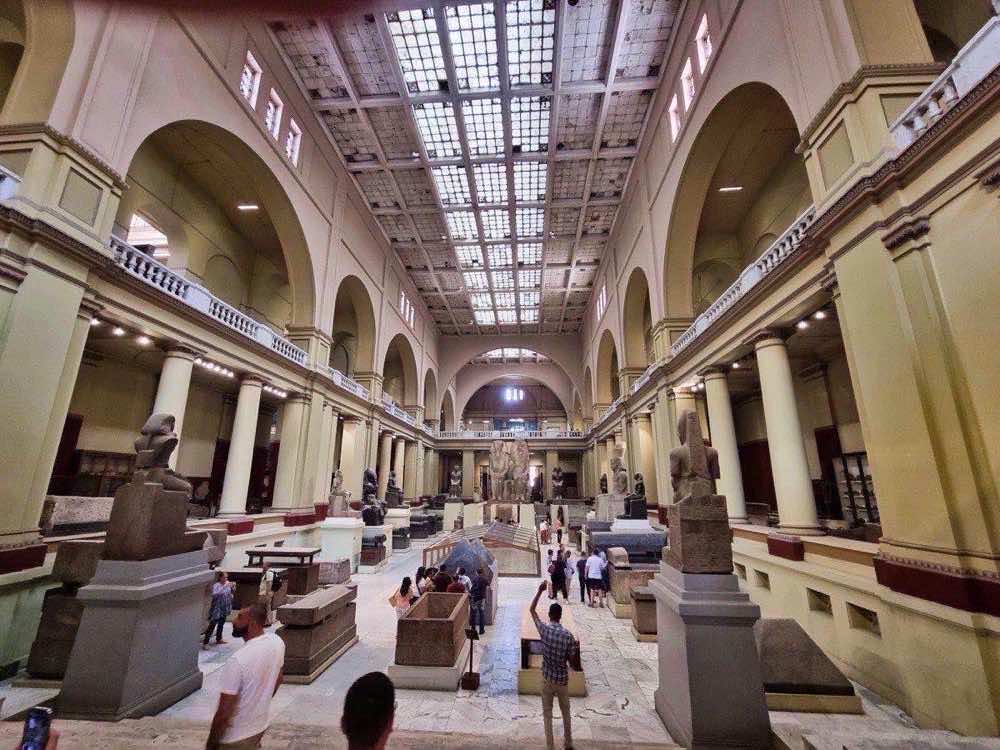
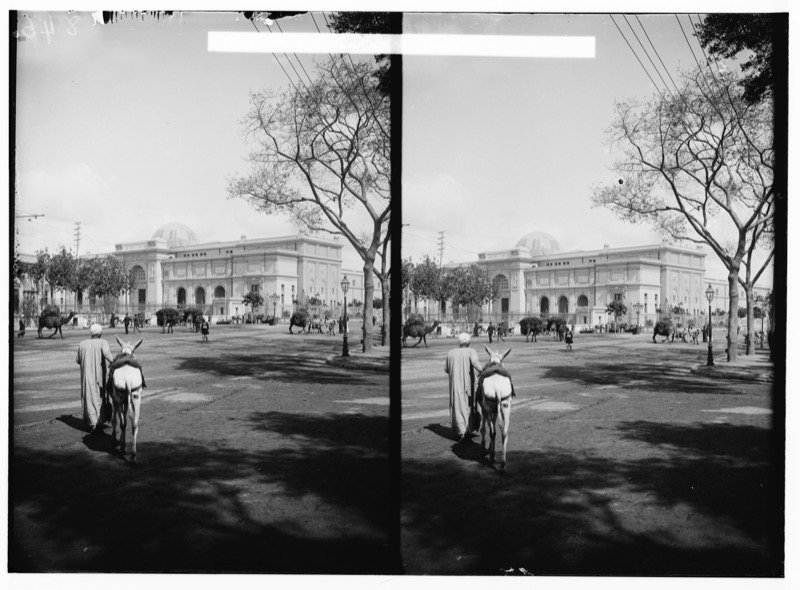
The Egyptian Museum on Tahrir Square, Cairo, opened in 1902 under the direction of French Egyptologist Gaston Maspero and remains one of the most significant archaeological museums in existence. Its pink Neoclassical exterior belies an interior of extraordinary density: approximately 170,000 objects, displayed in 107 halls across two floors, with a density that has accumulated over 120 years of acquisitions from excavations conducted across the entire country.
The ground floor is organised by period, running roughly from the Old Kingdom (2686–2181 BCE) in the north to the Greco-Roman rooms in the south. The New Kingdom halls — rooms 6, 7, 8 and 9 — contain the greatest concentration of royal statuary outside Luxor: colossal figures of Amenhotep III and Tiye, the seated statue of Thutmose IV with his mother Tiaa, and the exquisite Eighteenth Dynasty portraiture that includes some of the most technically accomplished sculpture of the ancient world.
The Royal Mummies Hall on the upper floor requires a supplementary ticket but is one of the most historically significant displays in any museum. Twenty-two royal mummies, identified through inscriptions on their coffins and confirmed by radiological examination, are displayed under climate-controlled conditions. The mummies of Ramesses II, Seti I, Tuthmose III and Hatshepsut — among others — are present. The hall is hushed and, for those with any sense of historical connection, profoundly affecting. Photography in the Mummies Hall is prohibited.
The museum's collection depth is its greatest virtue and its greatest challenge. Objects of world-historical importance — the Narmer Palette (c. 3100 BCE), the earliest complete royal iconographic programme; the Palette of King Scorpion; the wooden panel portrait of Hesira from Saqqara — sit in cases that have not been redesigned in decades, often accompanied by index-card labels. For the prepared visitor, this becomes an asset: the scholarly atmosphere and absence of interpretive apparatus reward those who arrive knowing what they are looking for. See our archaeology guide for context on key objects.
Opening hours: 09:00–17:00 daily. The museum is directly on Tahrir Square and accessible by Metro (Sadat Station, Lines 1 and 2).