Giza Governorate — Ongoing
Saqqara: The Most Active Dig Zone in Egypt
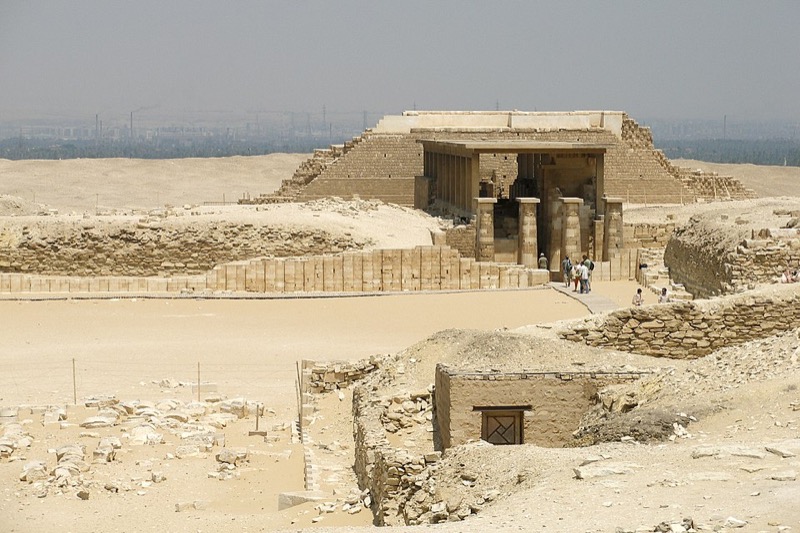
The Saqqara necropolis, stretching six kilometres along the desert escarpment south of Cairo, is the most densely excavated and archaeologically productive zone in Egypt. Its excavation history spans over 150 years, yet discoveries of the first order continue to be announced with unusual frequency — suggesting that the site's subsurface density has barely been sampled relative to what remains buried.
The necropolis is structured around the Step Pyramid complex of Djoser (Third Dynasty, c. 2650 BCE), which Imhotep designed as the first large-scale dressed-stone monument ever built. Surrounding it on all sides are mastaba tombs of Old Kingdom officials — flat-topped rectangular superstructures covering burial shafts — whose relief-carved walls depict scenes of agricultural, artisan and domestic life in meticulous detail. The mastaba of Ti, the mastaba of Kagemni and the double mastaba of Mereruka contain reliefs that remain among the finest examples of Old Kingdom two-dimensional art.
Recent excavations have focused on the area south and southeast of the Step Pyramid, where a series of large shaft tombs have been opened since 2018. These shafts, typically twelve to fifteen metres deep, contain Late Period (664–332 BCE) and Ptolemaic burial assemblages — painted wooden coffins, gilded mummy masks, ushabti figurines and in several cases mummified animal collections. The 2022 announcement of over 150 sealed bronze figurines of deities within a single water-filled shaft represented the largest find of its type since the early 20th century.
The Serapeum — the underground gallery system housing the giant granite sarcophagi of the sacred Apis bulls — is located beneath Saqqara. Each sarcophagus weighs approximately 70 tonnes and was sealed with a lid of equal weight. The gallery system extends 198 metres underground and was first excavated by Auguste Mariette in 1851. Access requires an additional permit available at the Saqqara ticket office.
New Kingdom tombs at Saqqara, including those of the Memphite necropolis of the court of Ramesses II, are the subject of ongoing excavation by the Leiden–Turin mission. Their work has produced extraordinary painted relief fragments, many depicting funerary scenes for senior state officials. Saqqara is best visited in combination with the Grand Egyptian Museum via our Cairo day itinerary guide.