7,000 Years of Recorded History
130+ Pyramids Documented
380 Catalogued Heritage Sites
Independent Heritage Research

Discover the Depth of Ancient Egypt

From the limestone plateau at Giza to the painted burial chambers of the Valley of the Kings, Egypt's civilisation spans millennia and continues to yield new discoveries each season. Our research centre has compiled rigorous, field-verified guides to help you navigate this extraordinary landscape — from towering hypostyle halls at Karnak to the subterranean corridors at Saqqara.

14 UNESCO World Heritage Sites
22 Royal Mummies Identified
1922 Tutankhamun Tomb Discovered
4.5M Objects in Cairo Museum
Iconic Destinations

Six Sites Every Visitor Should Understand

These are not merely tourist stops — each is a chapter in the longest continuous story of human civilisation. Understanding their context transforms a brief glance into a lasting memory.

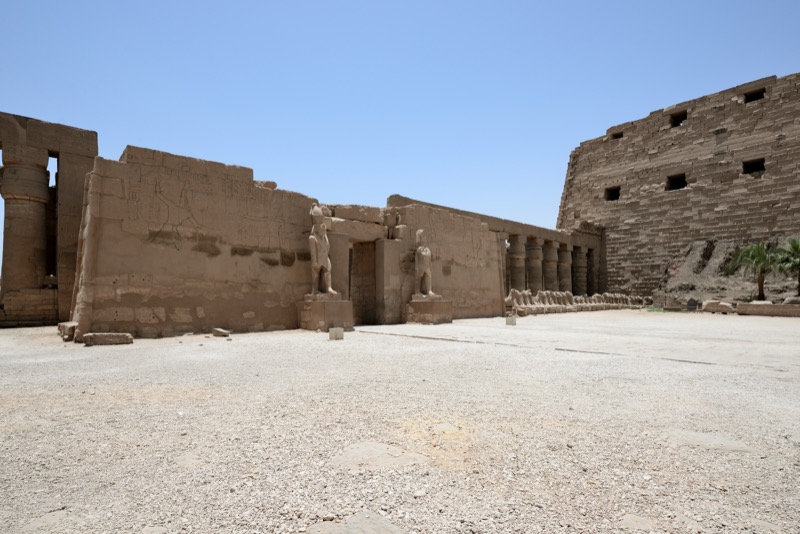
Great Hypostyle Hall at Karnak Temple Complex, Luxor, with massive sandstone columns
Luxor — Temple Complex

Karnak Temple Complex

The largest religious building ever constructed, Karnak covers more than 100 hectares and was built over 2,000 years by successive pharaohs. The Great Hypostyle Hall alone contains 134 columns, some reaching 21 metres in height. Its sacred lake, Avenue of Sphinxes and multiple sanctuaries represent the theological ambitions of New Kingdom Egypt at their apex. Annual festivals of Opet drew pilgrims from across the Nile Valley for weeks of ceremony.

Read full guide →
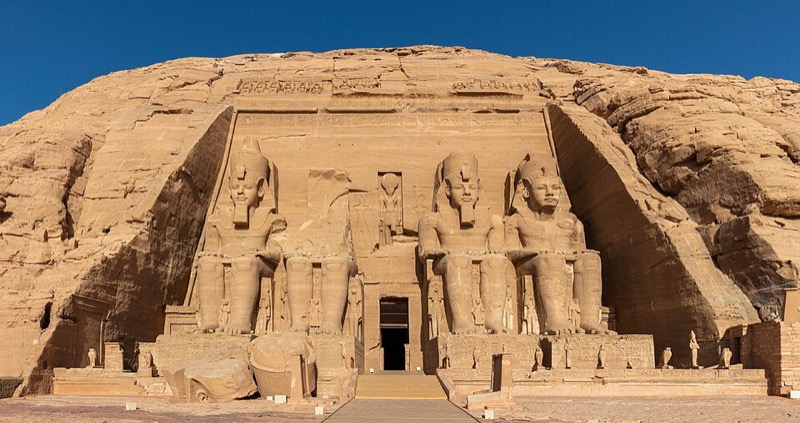
Facade of the Great Temple of Abu Simbel with four colossal seated statues of Ramesses II
Aswan — Rock Temple

Abu Simbel Temples

Carved directly into the sandstone cliff face of Nubia under Ramesses II, these twin temples were relocated in the 1960s — one of the greatest feats of archaeological engineering in history — to save them from the rising waters of Lake Nasser. The alignment of the Great Temple with the sun is so precise that twice a year, on the 22nd of February and October, solar light penetrates 65 metres to illuminate the inner sanctuary. Plan your itinerary around day trips from Aswan.

Read full guide →
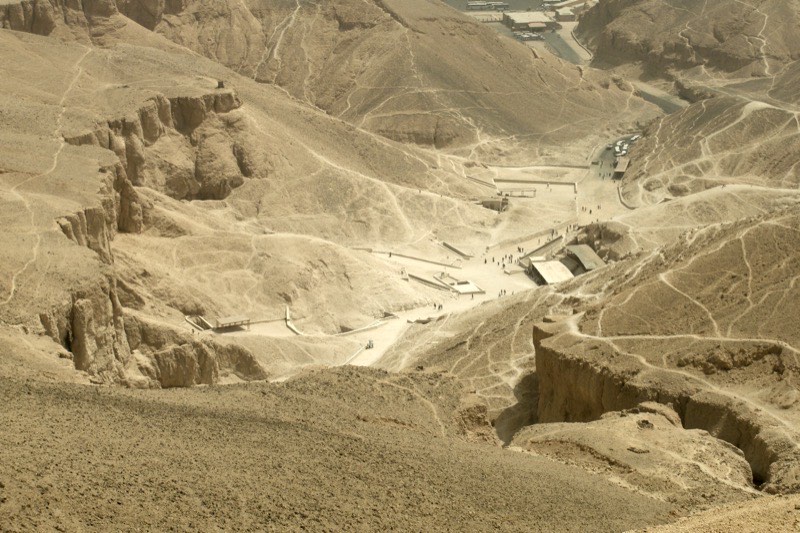
Aerial view of the Valley of the Kings, Luxor, showing the barren limestone ridge and tomb entrances
Luxor West Bank — Necropolis

Valley of the Kings

For nearly five centuries, from 1539 BCE to 1075 BCE, the rulers of Egypt's New Kingdom were buried in elaborate rock-cut tombs hidden in this remote wadi on the Theban west bank. Of 63 known tombs, some remain open to the public on a rotating basis. The painted walls depict episodes from the Book of the Dead, the Amduat and the Litany of Ra — theological texts guiding the pharaoh's soul through the underworld. See our archaeological overview for excavation history.

Read full guide →
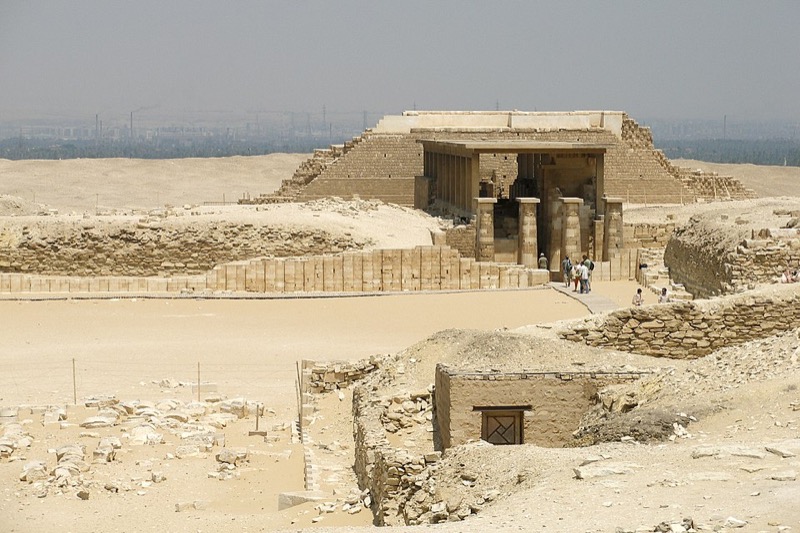
Step pyramid of Djoser at Saqqara, the world's oldest monumental stone structure
Giza Governorate — Necropolis

Saqqara Necropolis

Saqqara's Step Pyramid, designed by the architect Imhotep for the Third Dynasty pharaoh Djoser around 2650 BCE, is the world's oldest dressed-stone monumental structure. The surrounding necropolis spans 3,000 years and contains mastabas with preserved reliefs depicting everyday Old Kingdom life — bakers, butchers, scribes and musicians captured in meticulous detail. Recent excavations have uncovered remarkably well-preserved mummies and wooden coffins. Link this with a visit to the Grand Egyptian Museum.

Read excavation notes →
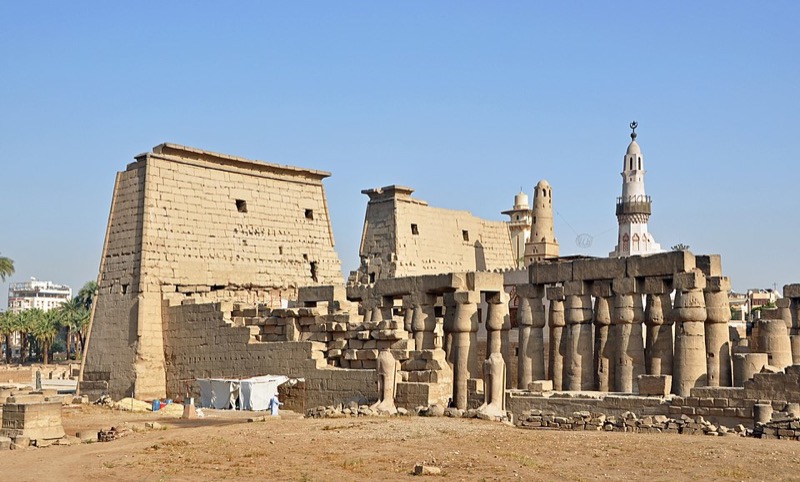
Pylons of Luxor Temple illuminated at dusk, with the obelisk of Ramesses II in the foreground
Luxor — New Kingdom Temple

Luxor Temple

Unlike Karnak, which was dedicated primarily to Amun's cosmic sovereignty, Luxor Temple was conceived as the earthly dwelling of the divine ka, the life-force of the pharaoh. Built largely by Amenhotep III around 1390 BCE and expanded by Ramesses II, it later became a Roman legion base, then a Coptic church, then a mosque — layers of history visible in a single visit. The Avenue of Sphinxes, restored and reopened in 2021, again connects Luxor with Karnak over three kilometres.

Read full guide →
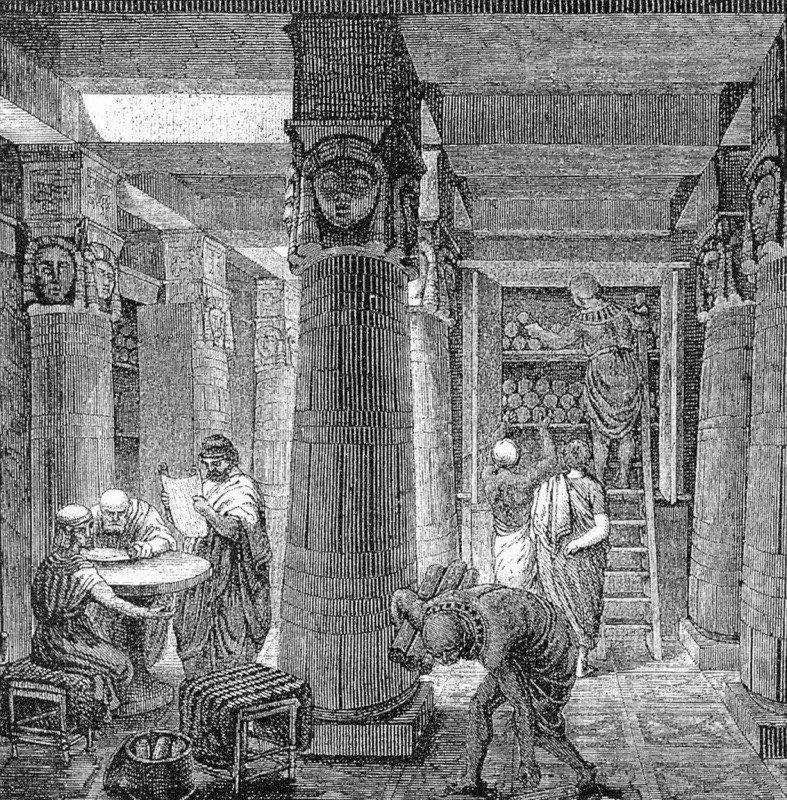
Historical illustration of the ancient Library of Alexandria, hub of classical scholarship
Alexandria — Classical Heritage

Alexandria & Its Legacy

Founded by Alexander the Great in 332 BCE, Alexandria became the intellectual capital of the ancient Mediterranean world. The Mouseion and its Great Library reputedly held half a million scrolls — texts from Homer to Euclid — attracting scholars such as Archimedes, Eratosthenes and Hypatia. The modern Bibliotheca Alexandrina, opened in 2002, commemorates this legacy. Underground at Kom el-Shoqafa lie catacombs blending Greek, Roman and Egyptian funerary traditions into a unique hybrid art form. Explore our Alexandria city guide.

Read city overview →
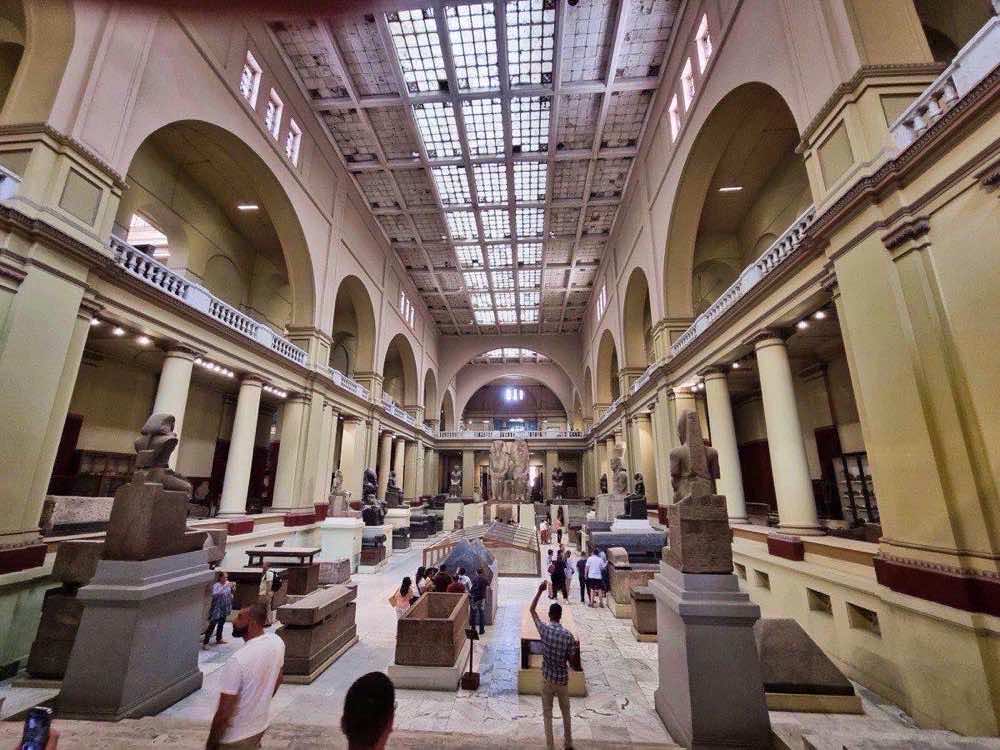
Interior of the Egyptian Museum in Cairo showing rows of display cases with ancient artefacts
Who We Are

Nile Chronicle Research Centre

Established in 2009 in Cairo's Talaat Harb district, our centre brings together Egyptologists, archaeologists, conservators and heritage educators to produce the most rigorously sourced independent commentary on Egypt's ancient civilisation available in the English language.

We neither sell tickets to attractions nor receive revenue from tourist operators, giving our guides a level of independence not always found in commercially produced travel material. When we write that a site warrants two hours of your time, or that a particular museum gallery is genuinely unmissable, those judgements are based on scholarly assessment rather than promotional arrangement.

Our field researchers visit each catalogued site at minimum once per calendar year, updating entry conditions, restoration status and new scholarly findings. Our written guides draw on primary sources including Egyptological journals, Ministry of Antiquities bulletins and direct communication with excavation teams.

Whether you are planning your first visit to the Giza Plateau or returning to explore the lesser-known temples of Middle Egypt, our guides are calibrated to be useful at every stage of that journey. Read more about our team and methodology.
How We Work

From Field Research to Published Guide

Our editorial process ensures every piece of information is verified against primary sources before publication and reviewed annually for accuracy.

Site Survey

Our researchers conduct annual visits, noting changes to access, conservation works in progress, new signage and any alterations to opening hours or visitor routes. Photographic documentation accompanies each survey.

Source Review

Each site guide is cross-referenced against peer-reviewed Egyptological journals, the Ministry of Tourism and Antiquities official bulletins, and — where available — published excavation reports from current dig teams.

Editorial Check

A senior Egyptologist reviews each guide for factual accuracy, dating conventions and terminology. Contested scholarly interpretations are noted clearly so readers understand the current state of academic debate.

Publication & Update

Guides are published with a version date. When major changes occur — new galleries open, sites undergo restoration — we issue prompt updates rather than allowing outdated information to mislead visitors planning their journeys.

Reader Feedback

What Visitors and Researchers Say

"The Saqqara guide was the most thorough free resource I found before my expedition. The excavation chronology alone saved me hours of searching through journals."

Dr Patricia Holt
Post-doctoral researcher, Oriental Institute, Chicago

"We used the Karnak guide during our school trip. Our students actually read it on the coach and arrived with genuine context. The site made sense to them in a way that a standard brochure never achieves."

Mrs Suzanne Fouad
Senior history teacher, Cairo International School

"Independent commentary free of commercial bias is rare in Egyptian heritage tourism. This centre fills that gap with genuine scholarly rigour. The Valley of the Kings tomb rotation schedule was accurate to the day."

Mr Andrei Voronov
Cultural heritage journalist, Moscow
Common Questions

Frequently Asked Questions

Practical information for visitors planning their first or return journey to Egypt's heritage sites.

October through April offers the most comfortable conditions for outdoor sites. Summer temperatures in Upper Egypt (Luxor, Aswan, Abu Simbel) routinely exceed 40°C, which makes extended walks through open temples genuinely hazardous and draining. Winter months, particularly December and January, can be crowded during European and North American school holidays but the weather is mild. Spring — March through May — often represents the best balance of reasonable temperatures and smaller crowds. At indoor sites such as the Egyptian Museum or the Grand Egyptian Museum, season is less critical, though guided afternoon tours are less crowded than morning sessions year-round.

Luxor's principal sites fall on two sides of the Nile. The East Bank holds Karnak Temple and Luxor Temple — together requiring a minimum of a full day, and ideally two days if you want to linger in the Hypostyle Hall at Karnak and read the wall inscriptions. The West Bank comprises the Valley of the Kings, the Valley of the Queens, Medinet Habu temple and the Mortuary Temple of Hatshepsut at Deir el-Bahri. An ambitious visitor can cover the highlights in a single full day, but a second day allows the Valley of the Kings alone to be explored properly rather than rushed. Budget a minimum of three full days in Luxor if this is your first visit.

Photography policies vary by site and change periodically. As of the most recent survey, hand-held photography without tripod is permitted at most outdoor archaeological sites without an additional fee. Inside the Egyptian Museum in Cairo, photography is permitted in most galleries but is prohibited in the Royal Mummies Room and certain conservation-sensitive display areas. In the Valley of the Kings, photography is prohibited inside individual tombs to protect the pigments of ancient paintwork from cumulative light damage. The Grand Egyptian Museum (GEM) at Giza permits photography throughout its public galleries. We recommend confirming current policies directly with the site at the time of your visit, as regulations are subject to review.

Entry fees at Egyptian heritage sites are set by the Ministry of Tourism and Antiquities and are subject to adjustment. As a general indication current at time of writing: the Giza Plateau (three main pyramids) is priced separately from the Sphinx and from individual pyramid interior access. Karnak Temple and Luxor Temple each carry separate admission. The Valley of the Kings standard admission covers entry to three tombs, with additional tickets required for the tombs of Tutankhamun, Seti I and Ramesses VI. The Egyptian Museum in Tahrir Square charges separate fees for the Royal Mummies Hall. Students and researchers holding valid institutional identification may be eligible for reduced rates. Please confirm current prices at our pricing overview page or directly with the Ministry of Tourism and Antiquities before travelling.

The Grand Egyptian Museum (GEM) at Giza, inaugurated in phases beginning in 2023, is designed to house the world's largest collection of Pharaonic artefacts — more than 100,000 objects — on a single site. The central atrium and its monumental statue of Ramesses II, standing 11 metres high, is freely accessible with a standard ticket. The Tutankhamun galleries, displaying all 5,000 objects recovered from his tomb for the first time together, require the standard admission plus a Tutankhamun wing supplement. Certain conservation and research wings are restricted to accredited scholars. The museum's café, library and gift areas require only entry to the outer grounds. Our museum guide covers each gallery wing in detail.

Not at all — our guides are specifically written to be accessible to visitors with no prior Egyptological background while still being substantive enough for those with academic familiarity. At every site, we begin with the essential historical context that makes the physical remains legible, then move into detail for those who want to go further. A visitor who reads our Karnak guide before arrival will understand what they are looking at when they stand before the Hypostyle Hall; they need not have studied New Kingdom theology in advance. The sites themselves are powerful even without scholarly preparation — but context transforms a visit from visual spectacle into genuine historical encounter.

Ready to Begin Your Exploration?

Reach the team for personalised site recommendations, research queries or itinerary advice.

Get in Touch